Industries · Energy
Heavy, oversized and remote: freight for energy projects.
Energy freight tends to be heavy, tall and headed somewhere without a loading dock. We plan the permits, the trailer and the last mile to the pad, the substation or the array.
What we handle
Equipment and materials for oil and gas, power generation, wind and solar projects, often to remote sites with tight access.
- Transformers, generators and switchgear
- Pipe, tubulars and drilling equipment
- Solar panels, racking and inverters
- Hazmat-qualified carriers for regulated materials
Pressure points
What makes energy freight different.
Super-heavy loads
Transformers and generators can need multi-axle trailers, engineering reviews and utility coordination.
Remote delivery
Lease roads, wind farm sites and solar fields have limited access and no permanent unloading equipment.
Regulated materials
Some energy freight is hazardous and needs placards, endorsed drivers and proper shipping papers.
Project timing
A late delivery can hold up commissioning, crews and expensive rented equipment.
How we work
Our energy freight program.
Transformers, generators and switchgear
Power generation and utility projects depend on equipment that is heavy, valuable and often oversized. Transformers, generators, switchgear and turbines may need RGNs, multi-axle lowboys or specialized trailers, and very heavy loads can require route engineering and coordination with utilities to lift lines along the way. Our specialized desk handles the planning: trailer selection, permits for each state, escorts and the timing of oversize travel.
Because many of these units have long lead times and no spare, we treat them as critical shipments from the start. That means more frequent updates, a named contact on our side and a plan for what happens if weather or a permit delay holds the load.
Oil and gas: pipe, tubulars and drilling equipment
Oilfield freight includes pipe and tubulars on flatbeds, drilling components, tanks and production equipment, often delivered to lease locations reached by unpaved roads. We match the trailer to the load and to the road, confirm site directions and contacts before dispatch, and use carriers who are comfortable working in the field. When a rig is waiting on a part, our 24/7 dispatch desk can arrange hot-shot or expedited service.
Wind and solar projects
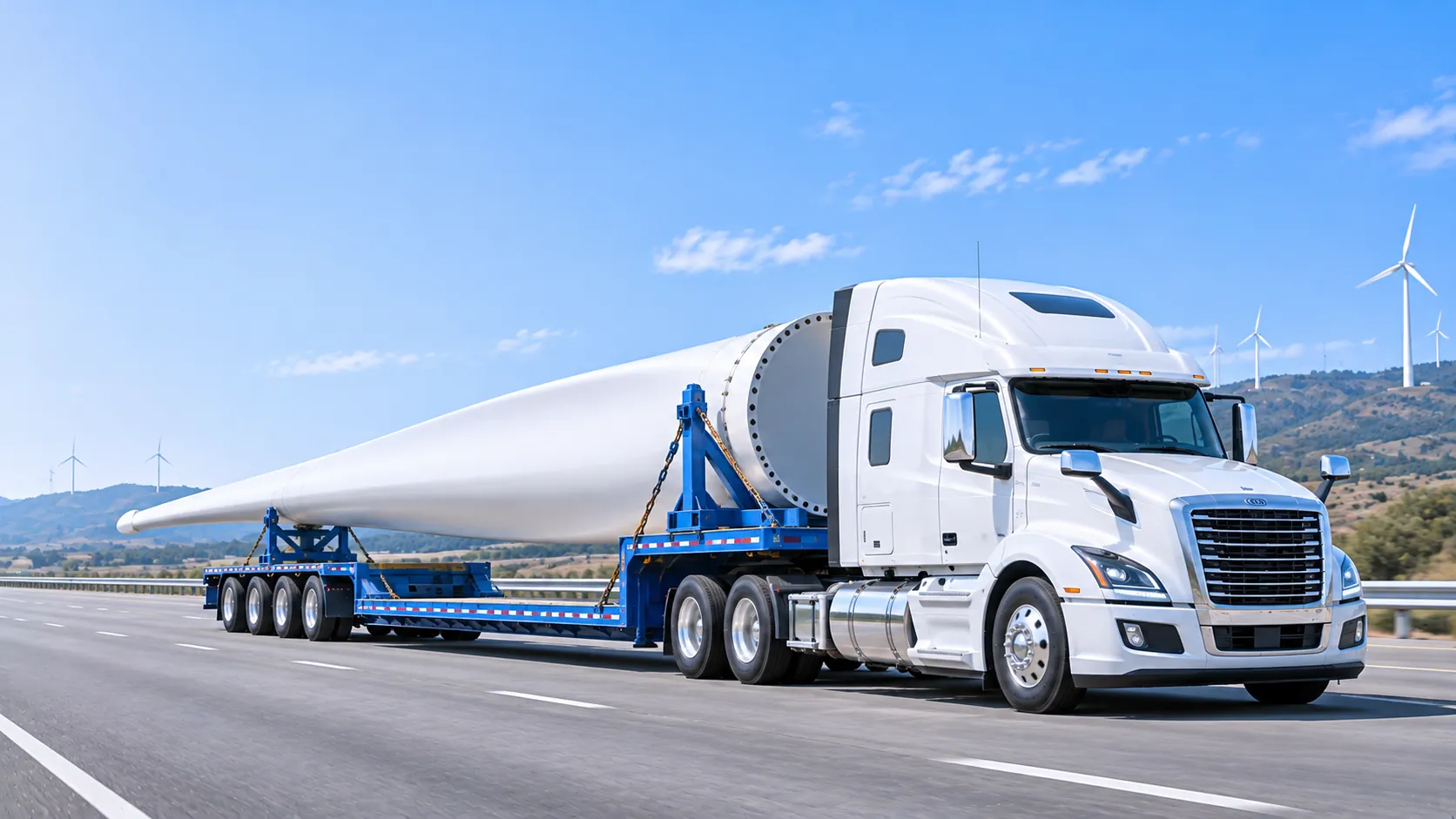
Renewable projects move large volumes of material into sites that are still under construction. Solar projects need modules, racking, inverters and cable delivered in a sequence the installation crews can work through. Wind projects add oversized components that need specialized planning. We can coordinate inbound freight from multiple suppliers against the site schedule and keep the gate from becoming a bottleneck.
Site conditions change quickly on these projects. We confirm access and unloading plans close to the delivery date and keep drivers in contact with the site so that problems are solved on the spot.
Hazardous materials and compliance
Some energy freight is regulated as hazardous material: certain chemicals, fuels, batteries and gases. These loads move only with carriers who hold the right registrations and insurance, drivers with the required endorsements and correct shipping papers and placards. We check those qualifications before tender, the same way we check authority and safety record for every carrier.
How we choose carriers for energy freight
Carriers on energy freight are reviewed for authority, insurance limits that match the value of the equipment and safety records, and for experience with the specific kind of load. A carrier who regularly hauls pipe is not automatically the right choice for a 200,000-pound transformer, and we do not treat them as interchangeable.
Site safety rules on energy projects are strict, from PPE and orientation requirements to speed limits on lease roads and check-in procedures at the gate. We pass those rules to carriers with the tender and confirm the driver can meet them before dispatch.
When a project spans months, we keep the same core group of carriers on it where we can. Drivers who already know the site and its rules deliver faster and safer.
Weather is a bigger factor on energy freight than on most freight. Oversize loads cannot travel in high winds in many states, ice and snow close lease roads and mountain passes, and heavy rain can make a site impossible to enter. We watch the forecast along the route and at the site in the days before a move, and we will recommend holding a load rather than sending it into conditions that put the driver, the equipment or the schedule at risk. When we hold a load, you hear from us with the reason and a new plan, not after the truck is already stuck.
Equipment we use most for energy
- Multi-axle lowboys and specialized trailers for transformers and super-heavy units.
- RGNs and step decks for generators, compressors, skids and switchgear.
- Flatbeds for pipe, tubulars, racking and structural material.
- Dry vans for solar modules, inverters, cable and boxed equipment.
- Hot-shot and expedited trucks for urgent parts to rigs and plants.
For very heavy loads, the trailer choice often depends on bridge ratings along the route as much as on the weight of the unit. We plan both together.
Updates you can plan crews around
Energy projects schedule crews, cranes and commissioning teams around equipment arrival. We send confirmation when the load is secured, updates during oversize travel and a call before arrival. When a permit window, weather or a route problem changes the timing, we tell you immediately with a revised plan. For multi-load projects, we can provide a regular summary of every inbound shipment against the site schedule.
Getting started
For a single heavy or oversized unit, send us the weight, dimensions, pickup and delivery locations and the target date, along with any drawings or lift points. For a project, tell us the site, the main suppliers and the schedule. Our specialized desk will review the route and permits and come back with a plan and a quote.
Small parts and urgent replacements can be booked by phone at any hour.
Energy FAQs
Common questions
- Can you move a transformer or generator?
- Yes. Our specialized desk plans super-heavy and oversize moves, including multi-axle equipment, permits, escorts and route engineering where needed.
- Do you deliver to remote sites?
- Yes. We confirm access, directions and unloading plans before dispatch and use carriers who are comfortable with field and lease-road deliveries.
- Can you handle hazmat energy freight?
- Yes, with carriers that hold the required hazmat registrations and insurance and drivers with the proper endorsements.
- Can you coordinate freight for a whole project?
- Yes. We can track inbound loads from multiple suppliers against the site schedule and flag conflicts early.
Have freight that needs to move?
Send the lane, the equipment and the date. Our team prices standard truckload lanes within the hour on business days, and the dispatch desk answers around the clock.