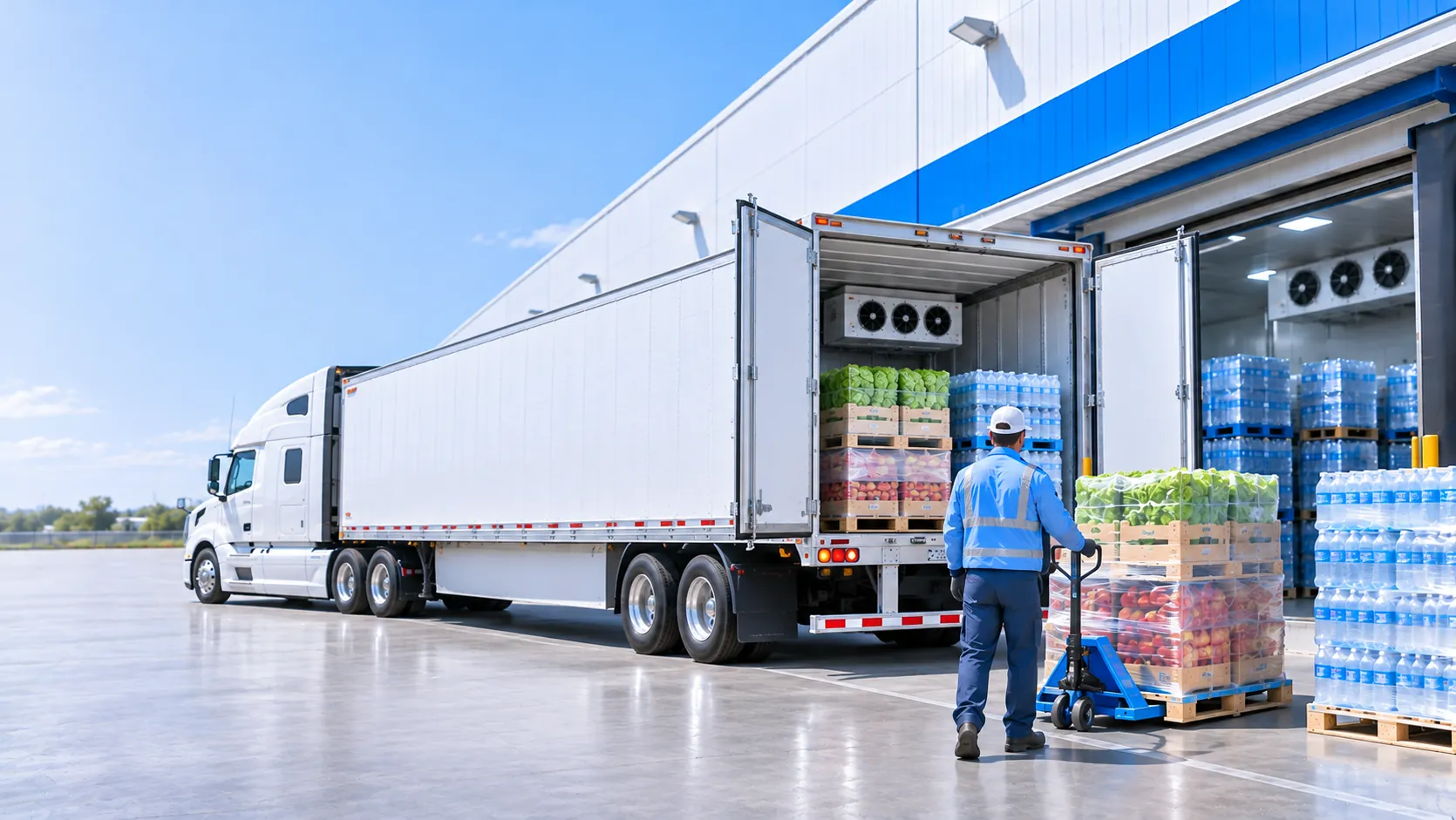
Industries · Food & Cold Chain
Food and beverage freight, kept at the right temperature on paper and in the trailer.
Food shippers need more than a cold trailer. They need set points written down, records that hold up in an audit, and carriers who understand what a rejected load costs.
What we handle
Temperature-controlled loads with written set points, pre-cool checks and temperature records that hold up in an audit.
- Fresh produce, dairy, meat and frozen foods
- Beverage and protect-from-freeze shipments
- FSMA sanitary transportation practices
- Cold storage and cross-dock options
Pressure points
What makes food & cold chain freight different.
Temperature control
Fresh, frozen and protect-from-freeze loads each need a specific set point and run mode, confirmed before loading.
Food safety rules
Sanitary transportation rules set expectations for trailer condition, temperature records and training.
Short shelf life
Produce and dairy cannot sit. Every delay eats into the time a retailer has to sell the product.
Strict receivers
Grocery DCs reject loads for temperature, pallet condition or a missed appointment.
How we work
Our food & cold chain freight program.
Temperature written down before the truck is loaded
Every refrigerated load we arrange has its set point and run mode, continuous or start-stop, written on the rate confirmation. The carrier confirms both in writing before dispatch. At pickup the driver is expected to pre-cool the trailer, check the product temperature where the shipper allows it, and record the set point on the bill of lading. Those steps sound basic, but they prevent most of the temperature disputes we see in the industry.
For loads that must not freeze, such as beverages, some produce and certain chemicals used in food plants, we use reefers in heat mode during cold months or insulated vans where appropriate. The requirement is spelled out so the carrier does not have to guess.
Sanitary transportation and records
Food shippers and receivers have obligations under sanitary transportation rules, and they need carriers who can support them. We ask carriers to confirm that trailers are clean, odor-free and in good repair, that drivers follow the shipper's written instructions, and that temperature data can be provided when requested. When a receiver asks for a download from the reefer unit, we get it from the carrier and pass it on.
If a load arrives out of temperature or is rejected, we document what happened straight away, notify the shipper and work out the best outcome for the product, whether that is a salvage sale, a return or a claim.
Retail and grocery distribution centers
Grocery and foodservice distribution centers run on appointments and they are strict about them. We book appointments where the shipper allows us to, confirm them with the carrier and track the load against the appointment time, not just the delivery date. Pallet height, pallet condition, labeling and seal rules are written on the rate confirmation so the load is not turned away at the door.
Dry food, ingredients and beverage
Not all food freight is refrigerated. Packaged goods, canned and dry ingredients, flour, sugar, snacks and beverages often move in dry vans, sometimes on drop-trailer programs at high-volume plants. These loads still need food-grade trailers and sensible handling, and we set the same expectations for cleanliness and condition. Where volume is steady, contract lane rates and consistent carriers help keep costs predictable.
For shippers who need short-term storage or cross-docking between production and distribution, our warehousing partners include temperature-controlled space in major food markets.
How we choose carriers for food freight
Reefer carriers are reviewed for authority, insurance and safety record, and then for the condition of their equipment and how they handle temperature instructions. Carriers who have caused temperature problems or rejected loads do not receive more food freight from us. For produce and protein, we favor carriers with a track record on those commodities, because loading, pre-cooling and airflow practices differ from frozen or packaged goods.
Seasonality shapes food freight more than most industries. Produce seasons shift capacity from region to region through the year, holiday baking and grilling seasons change what moves where, and winter brings protect-from-freeze requirements to loads that ship dry the rest of the year. We plan for those changes with you ahead of time, so the right equipment and the right carriers are lined up before the season starts rather than after the first rejected load. When a new item or a new customer adds a lane, we review its temperature, packaging and receiving requirements before the first shipment.
Equipment we use most for food and beverage
- 53-foot reefers for fresh, chilled and frozen loads, single or multi-temperature where available.
- Reefers in heat mode or insulated vans for protect-from-freeze freight in winter.
- Food-grade dry vans for packaged goods, beverages and dry ingredients.
- LTL and multi-stop service for smaller orders to stores and restaurants.
- Temperature-controlled cross-dock and storage space in major food markets.
Mixed loads of products with different temperature needs require planning before the order is picked. Ask us early and we will tell you whether a multi-temperature trailer or two loads is the safer option.
Visibility from the dock to the DC
We confirm the set point at pickup, send updates at agreed intervals and report any reefer alarm or delay straight away. For appointment-driven grocery and foodservice deliveries, we track each load against its appointment and warn you if it is at risk so the appointment can be moved while there is still time. On request, we provide temperature downloads after delivery.
Getting started
Tell us what you ship, the temperature requirements, your main lanes and the receivers you deliver to most often. If you have written transportation instructions for food safety, send them and we will make sure carriers receive them with every tender. We can start with spot loads and move to lane pricing once volume and service levels are clear.
Food & Cold Chain FAQs
Common questions
- How do you make sure the reefer is at the right temperature?
- The set point and run mode are written on the rate confirmation, confirmed by the carrier before dispatch and recorded on the bill of lading at pickup.
- Can you provide temperature records after delivery?
- Yes. When a shipper or receiver asks for a reefer download, we request it from the carrier and pass it along.
- Do you handle protect-from-freeze loads?
- Yes. We arrange reefers in heat mode or suitable insulated equipment and write the requirement on the rate confirmation.
- What happens if a load is rejected?
- We document the reason, notify you immediately and work through salvage, return or a claim, depending on what is best for the product.
Have freight that needs to move?
Send the lane, the equipment and the date. Our team prices standard truckload lanes within the hour on business days, and the dispatch desk answers around the clock.