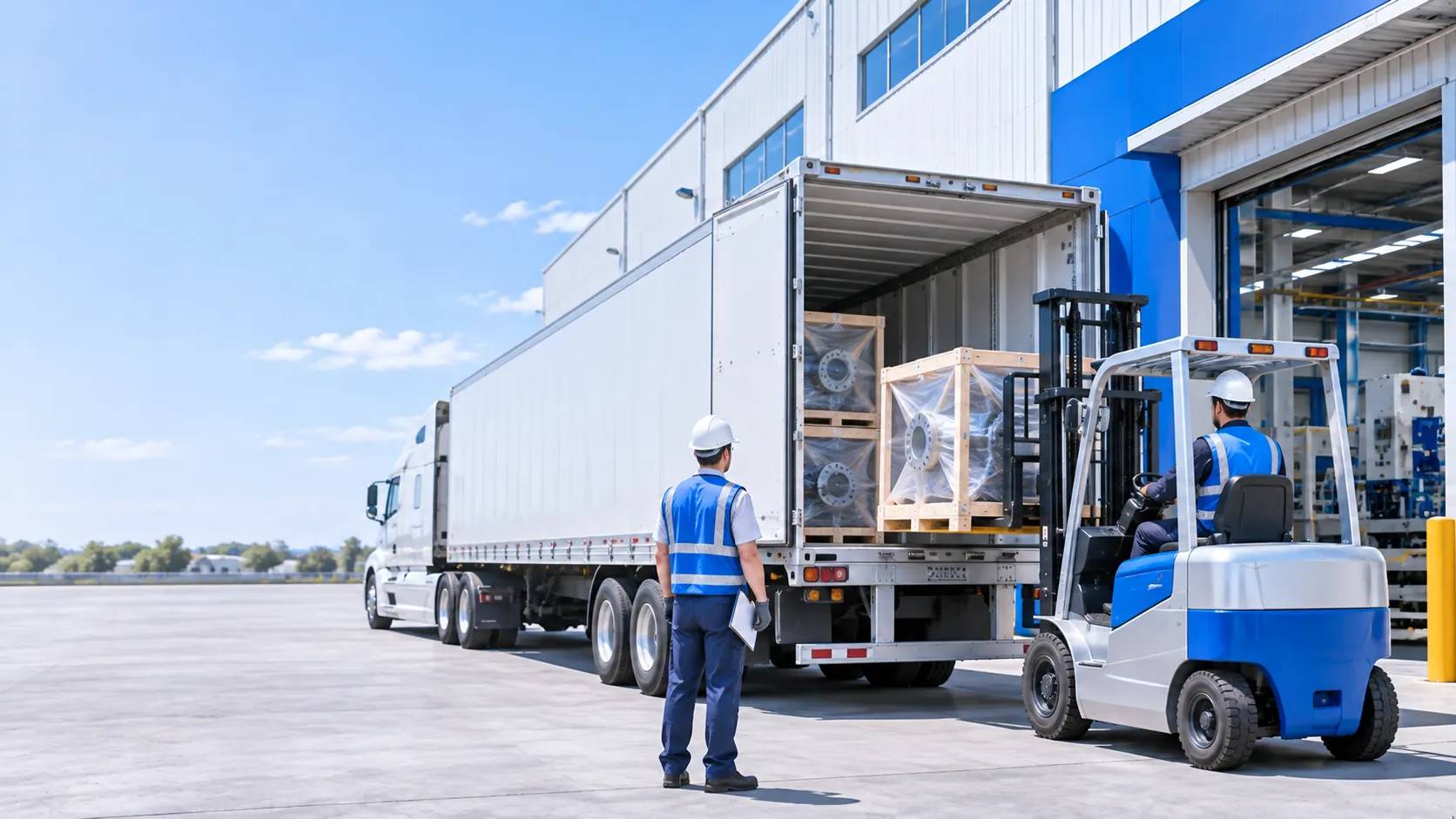
Industries · Manufacturing
Freight that runs on your production schedule.
Manufacturers need inbound material before the line needs it and finished goods out before the warehouse fills. We plan around your production calendar, not around whichever truck happens to be free.
What we handle
Inbound raw material and outbound finished goods, scheduled around production plans rather than truck availability.
- Just-in-time inbound to production lines
- Line-down expedited recovery
- Plant-to-DC and plant-to-plant shuttles
- Crated equipment and tooling moves
Pressure points
What makes manufacturing freight different.
Line-down risk
A missing part can stop a shift. We keep expedited options ready and escalate early when an inbound load slips.
Mixed freight
Coils on flatbeds, components in vans and crated tooling on step decks often ship from the same plant in the same week.
Dock discipline
Plants run tight receiving windows. We confirm appointments, dock hours and unload terms in writing before dispatch.
Cost control
Recurring lanes deserve stable pricing. We build lane rates around your volume rather than repricing every load.
How we work
Our manufacturing freight program.
Inbound: material that arrives before the line needs it
Most production problems that look like transportation problems start days earlier, when an inbound load was booked too late or with too little margin. We work from your purchase orders and production plan where you share them, so we can see which inbound shipments are critical and which have room. Critical loads are booked earlier, covered with carriers who have a record on that lane and tracked with more frequent check calls.
For suppliers that ship to you every week, we can set up a standing schedule with the same small group of carriers. Drivers who know your receiving dock, your paperwork and your gate rules spend less time waiting and make fewer mistakes. When a supplier is running late, we tell your planners as soon as we know, not when the truck fails to arrive.
Outbound: finished goods to customers and distribution centers
Outbound freight from a plant tends to be steady and predictable, which makes it a good fit for contract lane pricing and drop-trailer programs. A pool of empty trailers at your dock lets your shipping team load when product is ready, rather than holding a live truck and paying detention. We arrange the trailer pool with carriers who run your lanes regularly and keep the count balanced as volumes change.
When your customers are large retailers or distributors with strict delivery rules, we carry those rules onto every rate confirmation: appointment windows, labeling and pallet requirements, and what happens if the driver arrives early or late. That keeps chargebacks and refusals to a minimum.
When the line is down
Sometimes a part has to move tonight. Our dispatch desk is staffed around the clock, and for a line-down shipment we will quote and cover expedited options at the same time: a cargo van or straight truck for small parts, a team truckload for heavy or bulky freight, and air when the distance and the stakes justify it. You choose the option, and we follow the shipment from pickup to the receiving dock with updates at each step.
After the event, we can help you see whether the same failure is likely to repeat. If a particular supplier or lane causes repeated emergencies, it may be cheaper to change how that freight is planned than to keep paying for recovery.
Machinery, tooling and plant moves
Production equipment, molds, dies and tooling are high value and often awkward to load. We plan these moves with step decks, RGNs or air-ride vans depending on the piece, confirm rigging and loading responsibilities at both ends, and arrange permits for anything over legal dimensions. For a full plant relocation or line transfer, we can sequence dozens of loads so that equipment arrives in the order it will be installed.
How we choose carriers for plant freight
Carriers on manufacturing lanes are reviewed for authority, insurance and safety record like every carrier we use, and then for how they actually perform at plants: arriving inside windows, following PPE and site rules and handling paperwork correctly. Carriers who do well on your lanes get more of your freight, which is the simplest way to keep service consistent over time.
Equipment we use most for manufacturers
- 53-foot dry vans for packaged components, finished goods and palletized raw material.
- Flatbeds and step decks for coils, sheet, bar stock, structural parts and crated machinery.
- Conestogas when open-deck freight needs weather protection without tarping at the dock.
- Cargo vans, straight trucks and team trucks for line-down and expedited moves.
- RGNs and lowboys for presses, CNC machines and other heavy production equipment.
If you are not sure which trailer fits a load, send us the dimensions, weight and how it will be loaded. We will recommend the option that is safe and costs the least, and explain why.
Visibility your planners can use
Production planners need to know about a late inbound load before it is late, not after. We send status updates at pickup, at agreed check-call intervals and at delivery, and we flag any shipment that is at risk of missing its window as soon as the signs appear. For recurring lanes, we can share a simple weekly summary of on-time performance, dwell time at your docks and any exceptions, so that problems with a particular supplier or facility are visible and can be fixed.
Getting started
The quickest way to begin is with a handful of lanes you ship regularly. Send us the origins, destinations, equipment, typical weights and how often each lane moves, along with any dock rules or appointment requirements. We will come back with lane pricing and a capacity plan. Once the first lanes are running smoothly, it is easy to add more, including inbound supplier freight and expedited coverage.
Manufacturing FAQs
Common questions
- Can you handle both inbound and outbound freight for one plant?
- Yes. Many manufacturers use us for both. One account contact sees the whole picture, which helps when inbound delays affect what can ship outbound.
- Do you offer drop-trailer programs?
- Yes, on lanes with steady volume. We arrange the trailer pool with carriers who run your lanes and agree the terms in writing before trailers are positioned.
- How fast can you cover a line-down shipment?
- Dispatch answers 24/7. For most line-down calls we can quote expedited options within minutes and confirm a truck shortly after you choose one.
- Can you move oversize production equipment?
- Yes. Heavy haul and specialized loads are planned by our specialized desk, including permits, escorts and route surveys where they are required.
Have freight that needs to move?
Send the lane, the equipment and the date. Our team prices standard truckload lanes within the hour on business days, and the dispatch desk answers around the clock.