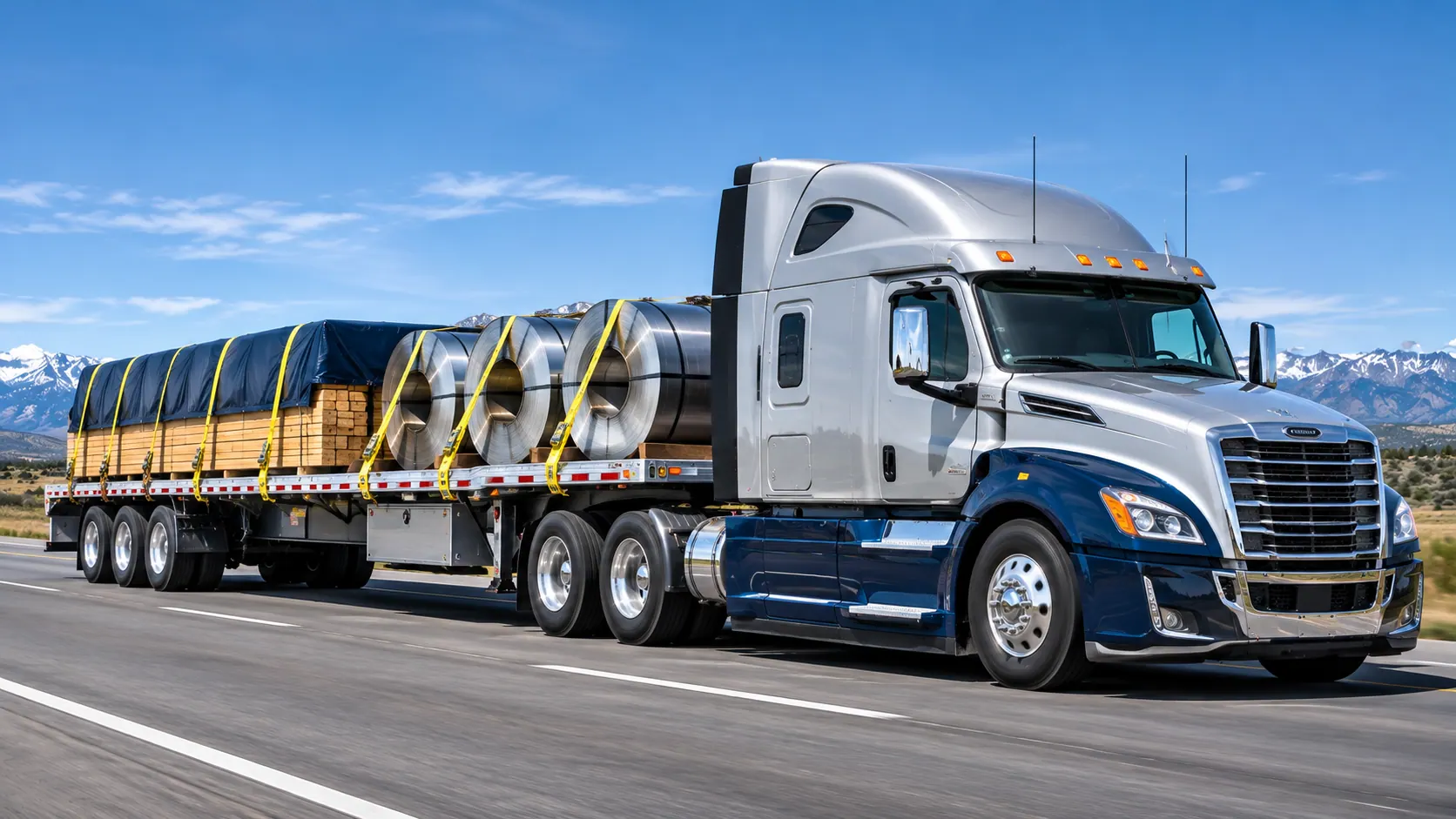
Open-deck freight, planned around the load
Flatbed freight rarely fits a template. A bundle of steel pipe, a pallet of brick, a stack of trusses and a generator on skids all need different trailer types, securement and handling at the dock. Our open-deck desk starts every quote by asking what the freight is, how it is loaded and unloaded, how tall it stands on the deck and whether it needs protection from weather. Those answers decide the equipment, the driver and the price.
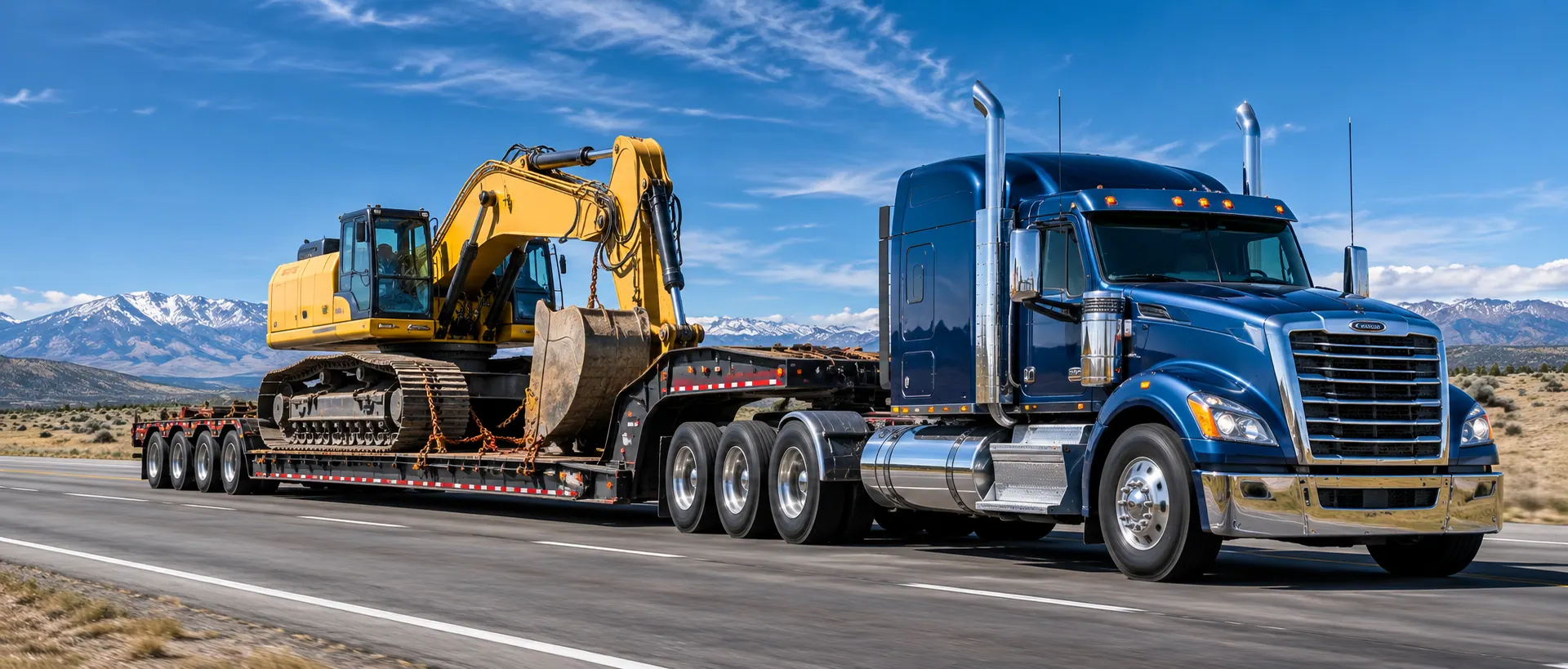
We arrange standard 48-foot and 53-foot flatbeds, step decks (also called drop decks), double drops for taller freight, and Conestoga trailers with rolling tarp systems. When a load crosses into oversize territory, we hand it to our heavy haul team so permits and routing are handled properly from the start.
Choosing between flatbed, step deck and Conestoga
Flatbed (48' and 53')
A flat deck sits about five feet off the ground. With the legal height limit at 13' 6" in most states, that leaves roughly 8' 6" for freight. Flatbeds suit steel, lumber, pipe, rebar, building materials and palletized product that can be loaded from the side by forklift. A 48-foot deck is common and lighter; a 53-foot deck adds length for long material such as trusses or beams.
Step deck (drop deck)
A step deck has an upper deck over the tractor's fifth wheel and a lower main deck around 3' 6" off the ground. The lower deck lets freight stand roughly 10 feet tall without a height permit. Step decks carry tractors, small excavators, tall machinery, industrial HVAC units and crated equipment. Some come with ramps so self-propelled equipment can drive on.
Conestoga
A Conestoga is a flatbed or step deck with a rolling tarp frame that slides open like an accordion. It gives open-deck loading access with van-like protection once closed. Conestogas are a strong fit for finished goods, coated steel, machinery that cannot be tarped directly, and loads where the shipper wants to avoid tarp damage or drivers working at height.
Steel, lumber and building materials
Much of our open-deck volume serves construction supply chains. We move structural steel, plate, coil, rebar and pipe from mills and service centers; dimensional lumber, engineered wood and panels from mills and treating plants; and roofing, block, brick, stone and precast items from producers to job sites and dealer yards.
Job-site deliveries need extra coordination. Many sites have narrow access, no forklift, or a crane booked for a specific hour. We confirm the site contact, the unloading method, whether a piggyback forklift or moffett is needed, and any road restrictions near the site before the load is dispatched.
Securement and tarping standards
Federal cargo securement rules under 49 CFR Part 393 set the number and working load limit of tiedowns based on the weight and length of the freight, with specific rules for coils, lumber, metal, concrete pipe and heavy equipment. We work with carriers whose drivers carry the right chains, binders, straps, edge protection and dunnage for the commodity, and we note the requirements on every rate confirmation.
Tarping protects freight from rain, road salt and dirt. Lumber tarps, steel tarps and smoke tarps are sized differently, and some loads need a full tarp while others need only the leading edge covered. Tell us how your freight should be tarped and we will price it in. Tarp fees are normal for open-deck freight and should be agreed before pickup, not argued about after delivery.
When a load becomes oversize
Freight wider than 8' 6", taller than the legal limit when loaded, longer than allowed for the trailer, or heavier than legal gross or axle weights requires state permits. Depending on the dimensions and route, the move may also need escort vehicles, specific travel hours or a route survey. A step deck can often keep a tall load legal where a flatbed cannot, which avoids permits entirely. If permits are unavoidable, see our RGN and heavy haul service.
Common open-deck charges, explained
Open-deck pricing has a few line items that van shippers may not expect. Knowing them in advance makes it easier to compare quotes on equal terms.
- Tarp fee: covers the time and wear of tarping, usually priced by tarp type (lumber, steel or smoke tarps).
- Extra stop or partial load: added when freight is picked up or delivered at more than one location.
- Detention: charged when loading or unloading runs past the free time agreed on the rate confirmation, usually two hours.
- Crane or forklift wait: job sites sometimes hold a truck while equipment is set up; we agree on terms beforehand.
- Permit and escort costs: only apply when the load is oversize or overweight, and are quoted separately.
What to send for an accurate open-deck quote
- Commodity, piece count and how it is packaged (bundles, crates, skids, loose)
- Length, width and height of the largest piece and total weight
- How it will be loaded and unloaded (forklift, crane, ramp, by hand)
- Tarp requirement and any securement notes (no chains on finished surfaces, for example)
- Pickup and delivery addresses with hours and site access notes
With those details we can price the right trailer the first time, which is what keeps open-deck freight from turning into a series of change orders.