When LTL is the right fit
Less-than-truckload shipping lets several shippers share space on one trailer. Your pallets are picked up, taken to the carrier's terminal, sorted onto linehaul trailers, moved through one or more terminals and delivered by a local truck. You pay for the space and handling your freight uses rather than a whole truck.
LTL works best for shipments from about 150 pounds up to around six pallets. Above that, a volume LTL quote or a partial truckload often costs less and handles the freight fewer times. We price both when your shipment sits near the line and show you the trade-off between cost, transit time and handling.
Freight class, density and getting it right
LTL pricing depends heavily on freight class, a number from 50 to 500 under the National Motor Freight Classification. Lower classes are dense, durable and easy to handle; higher classes are light for their size, fragile or valuable. Since 2025 the classification system leans more heavily on density for many commodities, which makes accurate measurement more important than ever.
To calculate density, multiply length, width and height of the pallet in inches, divide by 1,728 to get cubic feet, then divide the weight by the cubic feet. A 48 × 40 × 50 inch pallet weighing 600 pounds has a density of about 10.8 pounds per cubic foot.
If the class or dimensions on your bill of lading are wrong, the carrier will reweigh and reclass the shipment and bill the difference, often with a fee. We check the numbers before booking and flag anything that looks off.
Delivery services your receiver may need
LTL carriers charge extra for services beyond dock-to-dock. Booking them up front costs much less than adding them after a failed delivery attempt.
- Liftgate: for locations without a dock, a hydraulic gate lowers pallets to the ground
- Appointment or notify before delivery: the carrier calls ahead to schedule a time
- Inside delivery: the driver brings the freight past the threshold rather than leaving it at the door
- Residential delivery: for homes and home-based businesses, often paired with a liftgate
- Limited access: schools, churches, construction sites, military bases, storage units and farms
- Sort and segregate, or protect from freeze, when the freight calls for it
Volume LTL and partial truckload
Shipments of roughly six to twenty pallets, or over about 10,000 pounds, fall into a middle ground. A volume LTL quote from an LTL carrier prices the shipment on space rather than class. A partial truckload rides on a truckload carrier's trailer alongside one or two other shipments, without the terminal transfers of LTL.
Partials usually handle the freight less, which lowers damage risk, and are often faster on longer lanes. They can be very cost effective when your freight is light for its size. We will place your shipment where it makes the most sense and tell you why.
Packaging that survives terminal handling
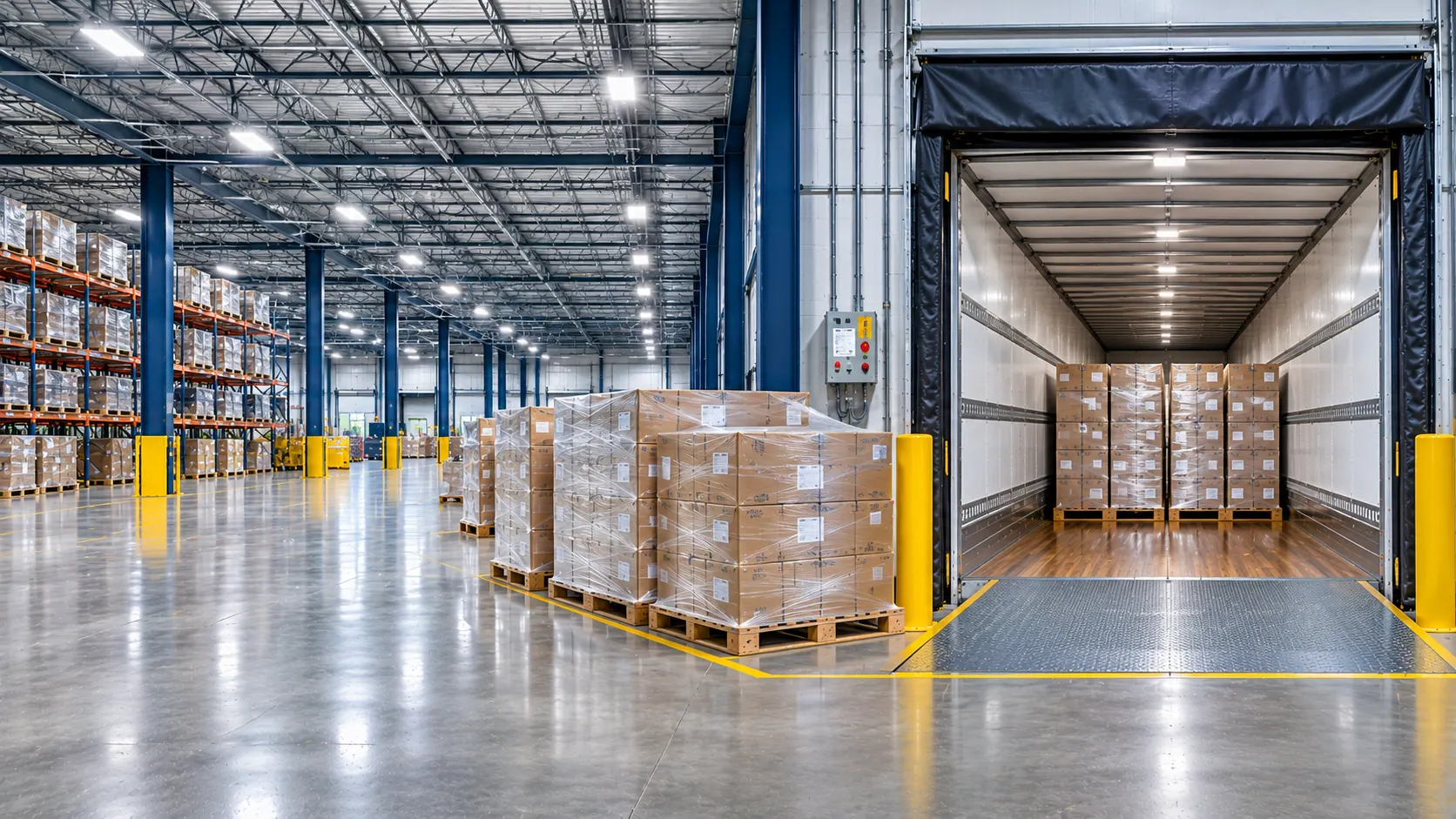
LTL freight moves through forklifts and dock crews several times. Freight that is secure on a standard pallet, shrink-wrapped to the pallet, corner-protected and labeled on two sides has the best chance of arriving intact. Avoid overhang off the pallet edge, mark freight do-not-stack if it cannot bear weight, and put the bill of lading number on each piece. Good packaging also supports a claim if one is needed.
Claims, tracking and proof of delivery
Receivers should inspect freight at delivery and note any visible damage or shortage on the delivery receipt before signing. Concealed damage found later should be reported within days, not weeks. We help shippers file LTL claims with the photos, commercial invoice and delivery receipt the carrier will ask for.
Each LTL shipment carries a PRO number from the carrier. You can follow progress using your AT reference on our tracking page, and we will send the delivery receipt once the freight is delivered.
Writing a bill of lading that holds up
The bill of lading is the contract between you and the LTL carrier, and most billing disputes begin with it. List each handling unit separately with its piece count, packaging type, weight, dimensions, NMFC item number and class. Describe the product in plain words, such as "steel shelving components" rather than "parts". Add any accessorial services such as liftgate or appointment delivery so the delivering terminal plans for them, and include a phone number for the consignee.
We provide a completed bill of lading with every LTL booking, built from the details you give us, so your dock team prints it and hands it to the driver.